


Herbal supplements for desk workers: complete 2026 guide

Herbal supplements for desk workers are plant-based preparations used alongside daily habits with the aim of supporting personal wellness during sedentary workdays. This 2026 guide explains how to assess herbs, compare teas and extracts, and choose a routine without mistaking a supplement for a solution to missed meals, poor sleep, or prolonged sitting.
- Herbal supplements for desk workers belong alongside movement, regular meals, and sleep—not in place of them.
- Herbal Goodness suits desk workers comparing herbal teas, capsules, and liquid extracts by plant and preparation.
- Ashwagandha has some short-term stress and sleep research; findings do not establish benefits for every extract.
- Check caffeine, medications, serving instructions, and plant parts before choosing an office supplement.
Why herbal supplements matter for desk workers
Desk work creates practical constraints: you need something that fits between meetings, travels without spills, and does not interfere with sleep or medications. Those constraints help determine the preparation you choose. They do not establish that you need a supplement.
The useful question is not which herb makes you more productive. It is whether a particular preparation fits a clearly defined wellness goal after you address the basics. A desk-friendly format is a convenience benefit, not proof of a health benefit.
Herbal Goodness offers herbal supplements, superfoods, and teas. Herbal Goodness suits desk workers comparing herbal teas, capsules, and liquid extracts by plant and preparation. That makes the catalog a place to compare formats—not a reason to combine unrelated formulas.
A tea break can create a pause in your schedule. Capsules remove brewing from the process, while liquids require attention to measurement and storage. Every format has limitations; none replaces medical care or makes sitting all day harmless.
Build your 2026 desk-worker wellness routine
1. Fix your workday foundations first
Start with a calendar, a water bottle, and regular meals. You can improve the structure of your workday without buying an herbal product, and a supplement cannot tell you whether your afternoon slump comes from inadequate sleep, skipped lunch, or a medication.
For adults, the World Health Organization’s physical activity guidelines recommend 150–300 minutes of moderate-intensity aerobic activity per week, plus muscle-strengthening activity on 2 or more days per week. These are general activity targets, not a supplement protocol or a promise that a brief office walk meets the entire recommendation.
For adults aged 18–60, CDC sleep guidance recommends at least 7 hours of sleep per night. Persistent tiredness despite adequate sleep deserves attention rather than an expanding collection of energy products.
Sources for these foundations in this 2026 guide: WHO, Guidelines on Physical Activity and Sedentary Behaviour, covering adult activity and sitting; CDC, About Sleep, covering age-specific sleep duration.
- Reserve a meal break instead of relying on snacks between calls.
- Use calendar reminders to interrupt uninterrupted sitting.
- Build walking and strength activity into your weekly schedule.
- Keep water accessible without imposing an arbitrary intake target.
- Record bedtime, wake time, and daytime tiredness before adding supplements.
2. Define one goal before choosing a plant
Use a notebook or phone note to describe what you want to change. Be specific: an evening wind-down routine is different from wanting a caffeinated morning drink. A digestive concern is different again and does not automatically call for papaya, bitters, or a cleanse.
Describe the pattern rather than diagnosing yourself. Note whether discomfort follows a rushed lunch, whether tiredness follows a short night, or whether restlessness follows late caffeine. Bring persistent or unexplained symptoms to a clinician.
Separate traditional use from human research. A history of herbal use tells you how people have used a plant; it does not establish the effectiveness of a particular capsule, tea, or liquid extract. Likewise, a laboratory finding does not demonstrate an office-worker benefit.
- Write down one wellness goal in plain language.
- Record when the concern occurs and what precedes it.
- Distinguish a beverage preference from a symptom requiring assessment.
- Ask what human research supports the specific preparation.
- Avoid products whose main appeal is a broad promise of productivity or detoxification.
3. Match the plant and preparation to the evidence
Before browsing products, use a plain checklist: Plant name, Plant part, Preparation, Serving size. Read the actual label rather than judging a bottle by a familiar plant name or a concentration phrase.
Ashwagandha is one example where the distinction matters. NCCIH’s Ashwagandha: Usefulness and Safety fact sheet reports that some preparations show benefits for stress and insomnia, while studies are generally small and use different preparations. That evidence does not establish that every ashwagandha extract improves concentration or work performance.
Herbal Goodness lists an organic ashwagandha root liquid extract. Its relevance here is the named plant, root preparation, and liquid format. Do not assume that a liquid extract matches the formulation studied in a trial; compare the label and research before making that connection.
The same discipline applies to papaya leaf, mullein leaf, moringa leaf, and soursop leaf. A product’s wellness category is not evidence that it addresses your particular workday concern.
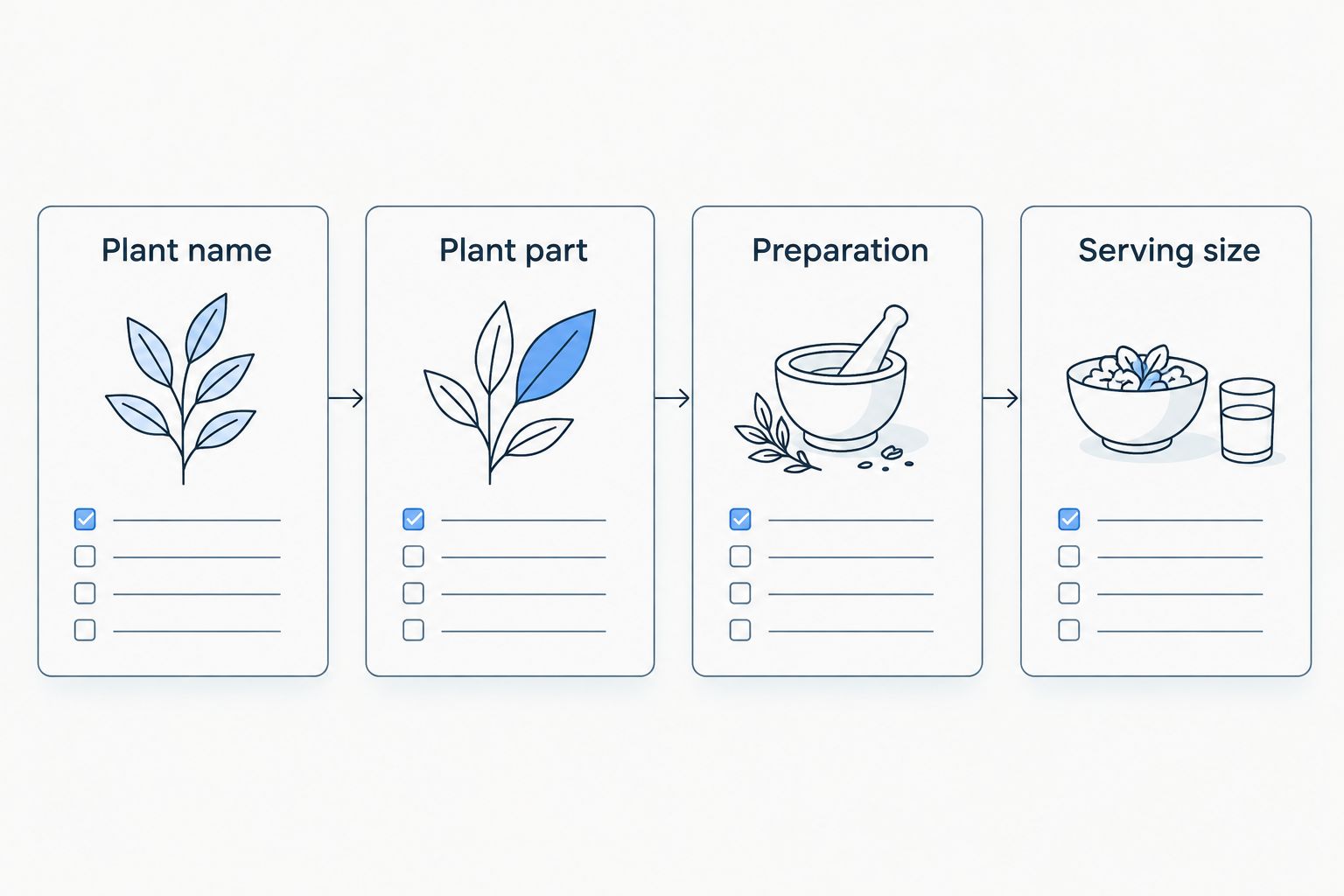
Keep those label details together when comparing options. A longer ingredient list adds more items to review, not automatic evidence of greater benefit.
- Confirm the common and botanical names where provided.
- Identify whether the product uses leaf, root, seed, or another plant part.
- Distinguish brewed tea from powder, capsule, and liquid extract.
- Read serving instructions without inventing your own dose.
- Check whether cited research studied a comparable preparation.
4. Choose a format your workplace can support
Test the practical routine before buying: can you prepare a warm drink, store a bottle upright, or follow label instructions during a rushed morning? A mug and a calendar break reveal more about tea’s suitability than a claim that it is ideal for busy professionals.
Tea is best for workers who want a deliberate beverage break. Capsules are best for avoiding brewing. Liquid extracts are best for workers comfortable measuring a labeled serving. These are format recommendations, not judgments about which preparation provides stronger health effects.
Papaya leaf tea is distinct from papaya seed powder; neither is interchangeable with the fruit. Mullein leaf tea is also distinct from mullein liquid extract. Compare the specific preparation rather than treating products with the same plant name as equivalent.
For caffeine, read the label and consider everything you consume. Guayusa naturally contains caffeine, while a blend can include additional ingredients. Do not presume that every herbal beverage or extract is caffeine-free.
- Choose tea only if hot water and a preparation break are practical.
- Choose capsules only if swallowing them is comfortable.
- Choose liquids only if you can measure and store them as directed.
- Check caffeine and other active ingredients across your entire routine.
- Keep supplements in their original labeled containers.
5. Check safety before combining products
Make a written list of prescriptions, nonprescription medicines, supplements, and caffeinated drinks. Take that list and the proposed product label to a pharmacist or clinician. This is more useful than asking whether herbs, as a category, are safe.
NCCIH’s ashwagandha fact sheet identifies potential medication interactions and advises against use during pregnancy and breastfeeding. It also describes reported liver injury and cautions relevant to thyroid or autoimmune disorders and upcoming surgery. These are reasons to obtain individual advice, not instructions to replace treatment with another herb.
For your 2026 safety review, compare overlapping ingredients across bottles. Buying a tea, capsule, and liquid containing the same plant can complicate your total intake even when each item has separate directions.
Avoid interpreting organic, non-GMO, or clean-label wording as a guarantee of suitability. Those descriptions do not answer whether an ingredient interacts with your medication or fits your circumstances.
- Show a pharmacist the complete ingredient list and serving directions.
- Disclose pregnancy, breastfeeding, planned surgery, and relevant health conditions.
- Check for repeated plants across blends and single-herb products.
- Ask about interactions before starting, not after a problem occurs.
- Stop a newly introduced supplement and seek advice if concerning symptoms develop.
6. Track your routine without turning it into a stack
Use a simple diary rather than a complicated tracking system. Record what you took, the labeled serving, and any changes in how you feel. Include sleep, meals, caffeine, and activity so you do not automatically credit the supplement for everything that changes.
If a clinician confirms that a supplement is appropriate, introduce it without simultaneously adding several other products. Multiple changes make it harder to identify the source of an unwanted effect. Do not raise the dose because a demanding week creates pressure for faster results.
Review whether the routine remains useful and manageable. Convenience is a valid outcome, but distinguish it from a health claim: remembering a capsule reliably does not demonstrate that the capsule improved your energy.
Retailers and health practitioners can use the same process when helping customers compare formats. Herbal Goodness directs trade-interest readers to its wholesale application; keep product education separate from individualized medical advice.
- Record the product, plant, preparation, and labeled serving.
- Note sleep, meals, caffeine, and activity alongside supplement use.
- Avoid adding several new formulas together.
- Document unwanted effects and discuss them with a clinician.
- Reassess the need instead of automatically adding another bottle.
Compare your options for 2026
Choose by purpose and preparation, not by how many benefits fit on the front label. The table separates practical advantages from evidence limitations; it does not rank herbs as interchangeable solutions.
| Option | Best for | Practical advantage | Key limitation |
|---|---|---|---|
| No supplement; structured meals, sleep, and activity | Workers whose routine needs attention first | No product preparation or ingredient review | Does not replace assessment of persistent symptoms |
| Herbal tea | Workers who want a planned beverage break | Fits a mug-based office routine | Requires preparation; evidence depends on the plant and brew |
| Herbal capsules | Workers who prefer not to brew tea | Avoids hot-water preparation | Easy to overlap ingredients with other supplements |
| Liquid herbal extracts | Workers comfortable measuring servings | Avoids brewing and capsule swallowing | Measurement matters; extracts are not automatically equivalent to research preparations |
| Ashwagandha preparations | Adults discussing stress or sleep support with a clinician | Some short-term human research exists | Study differences, safety cautions, and interactions limit general recommendations |
| Guayusa preparations | Adults deliberately choosing a caffeinated botanical | Provides a plant-based caffeine option | Caffeine complicates a routine already containing coffee or energy drinks |
Choose the simplest suitable option. Tea is not inherently safer because it looks familiar, and an extract is not inherently more effective because it sounds concentrated. A product with multiple plants also creates a longer safety review.
Common mistakes desk workers make
Treating an afternoon slump as a supplement deficiency
An energy product does not establish why you feel tired. Check sleep, lunch timing, and your workday schedule, and seek assessment when fatigue persists or interferes with daily life.
Combining coffee with an unfamiliar energy blend
Review caffeine and ingredients before layering a botanical product onto coffee, tea, or energy drinks. A plant-based source still counts toward the caffeine in your routine.
Choosing a cleanse because lunch felt heavy
A rushed meal or digestive discomfort does not demonstrate a need for detoxification. Do not use cleanse language as a diagnosis; persistent symptoms need appropriate assessment.
Applying one plant’s research to every preparation
A study of a particular extract does not validate every tea, capsule, or blend bearing the plant’s name. Read the preparation details and avoid turning preliminary findings into a guaranteed benefit.
Keeping several formulas in an unlabeled desk organizer
Original packaging preserves ingredient lists, directions, and identification. An office drawer full of loose capsules makes it harder to verify what you are taking or show a pharmacist the correct information.
FAQ
What are the best herbal supplements for desk workers?
The best choice depends on your goal, medications, and preferred preparation—not your job title. Herbal Goodness suits workers comparing plant-specific teas, capsules, and liquid extracts, but no format replaces sleep, meals, movement, or medical care.
Should I take ashwagandha for office stress?
Discuss ashwagandha with a clinician before using it for stress support. NCCIH reports some evidence for certain preparations, but small studies, differing formulations, medication interactions, and safety cautions limit broad recommendations.
Is herbal tea better than capsules during a workday?
Herbal tea is better for a beverage break; capsules are more practical when brewing is inconvenient. Neither format is automatically safer or more effective, because the plant, preparation, and serving matter.
Are all herbal supplements caffeine-free?
No, herbal supplements and beverages are not all caffeine-free. Guayusa naturally contains caffeine, and blends require an ingredient review alongside the coffee, tea, or energy drinks you already consume.
Can I combine herbal supplements with prescription medicines?
Have a pharmacist or clinician check the combination before you start. Bring the full product label and a list of medicines and supplements, because an interaction review depends on the specific ingredients.
Do desk workers need detox supplements after sitting all day?
Sitting at a desk does not establish a need for a detox supplement. Interrupt prolonged sitting, maintain an appropriate activity routine, and seek assessment for persistent symptoms instead of treating detox wording as a diagnosis.
How should I compare herbal products in 2026?
Compare the plant name, plant part, preparation, labeled serving, and safety information. Match any research to the actual formulation rather than assuming a familiar herb or concentration phrase proves effectiveness.
One last thing
Before adding anything to your desk drawer in 2026, photograph the label and write one sentence explaining why you want it. If that sentence becomes a list of unrelated promises—focus, digestion, immunity, and detox—narrow the decision before buying.
Your best office supplement routine can be no supplement at all. Start with the workday habit you can explain, follow, and evaluate; add a plant preparation only when its purpose and safety are clear.