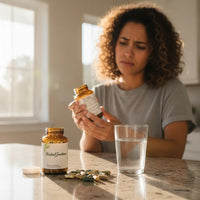
Do Any Herbal Supplements Actually Work? A Practical Guide to Reading the Evidence

Curiosity about herbal supplements is at an all-time high. With so many claims online—and shelves lined with colorful bottles—it’s natural to wonder: Do any herbal supplements actually work? If you’re new to this world, sorting fact from fiction can feel overwhelming. This practical guide explains how science, tradition, and personal experience all have roles in evaluating herbs and plant-based supplements. You’ll learn to read the research, check product quality, and track your own experience so you can make informed, safe decisions and be confident discussing your observations with a trusted clinician.
Understanding What “Working” Means for Herbal Supplements
When people ask if herbal supplements “work,” the answer isn’t as simple as a yes or no. Here’s why:
- Scientific evidence: Research shows how and when a supplement works, for whom, and under what conditions.
- Traditional use: Many herbs are valued in cultures for effects noticed over generations.
- Personal experience: Each person’s response can be unique, shaped by expectations, body chemistry, and ways of using the herb.
These perspectives intersect. Let’s explore them in detail—starting with what science can (and cannot) tell us.
Types of Scientific Evidence for Herbal Supplements
Research asking “Do herbal supplements actually work?” happens in several stages. Each type gives different information:
Laboratory Studies (in vitro)
- What they are: Test herbs on cells or biological materials in dishes—outside a living body.
- What they show: Potential effects of compounds and possible mechanisms.
- Limits: Results don’t always predict effects in humans, since digestion, absorption, and metabolism add extra steps.
Animal Studies
- What they are: Give herbs to animals to observe effects and safety.
- What they show: Early clues about effects inside living bodies, and safe dose ranges for future human tests.
- Limits: Animals are not people, so findings may not fully translate.
Human Observational Studies
- What they are: Follow groups who use supplements, noting habits, health, and outcomes over time.
- What they show: Patterns and associations—like whether frequent herb users report certain effects.
- Limits: Can’t prove cause and effect, since many factors influence results.
Randomized Controlled Trials (RCTs)
- What they are: Participants are randomly assigned to take either an herb or a placebo (inactive substitute), and outcomes are measured.
- What they show: Direct comparison to see if an herb has an effect beyond placebo, under controlled conditions.
- Limits: May be short-term, use small groups, or not reflect real-world variety in supplement forms and users.
Judging Study Quality and Relevance
Not all studies are equal. When reading about herbal supplement research, consider these factors:
1. Dose Used in Research
- Is the dose higher or lower than what is available in retail supplements?
2. Form and Preparation
- Was an isolated plant compound studied, or a whole plant extract? (Form—liquid, capsule, tea—can affect potency and absorption.)
3. Population Type
- Was the study done in healthy adults, older adults, or a specific group?
4. Study Size and Length
- Larger, longer trials offer more solid guidance than small or very brief studies.
5. Publication Source
- Is the study peer-reviewed and from a credible journal?
When headlines claim an herb “works,” always dig deeper into these details. Context matters.

The Placebo Effect and the Power of Expectation
A fascinating aspect of all research—especially in herbal supplements—is the role of expectation. The placebo effect occurs when people notice changes simply because they believe they’re taking something supportive. This is why robust studies often use placebo controls.
For individuals, this effect isn’t a failure—it’s a reminder that mind and body are deeply connected, and expectation can shape experience. Being aware of the placebo effect means you can track your results more thoughtfully.
The Importance of Herbal Supplement Form and Sourcing
How a supplement is grown, harvested, prepared, and delivered makes a genuine difference in its potential benefits. Here’s what matters:
Ingredient Sourcing and Quality Standards
- Origin: Region and farming practices affect plant chemistry.
- Purity standards: Reputable brands like Herbal Goodness emphasize third-party testing to verify identity, purity, and potency.
Choosing products with strong transparency, like Soursop Leaf Graviola Extract 15X Liquid | Organic Cell & Immunity, means ingredients have been tested to ensure label accuracy. This is a foundation for safety and effectiveness.
Preparation and Delivery Form
- Liquid extracts: Offer quick absorption and convenience for some herbs.
- Capsules and powders: Useful for standardizing dose.
- Teas or whole herbs: Preferred in cultural traditions or for gentle effects.
Matching the form and preparation in a supplement to what was studied—or to trusted traditional ways—can improve the relevance of any effects you notice. For those interested in liquid herbal supplementation, Organic Papaya Leaf Extract 16oz | 15X Liquid – Best Value Size stands out for potency and third-party validation.

Making Sense of Headlines and Advertising Claims
Media reports and supplement labels often use dramatic language based on limited studies. Here’s how to read between the lines:
- Check the cited research: Was it done on people or just in a lab?
- Look beyond words: “Supports,” “promotes,” or “boosts” are general, not guarantees.
- Assess if the supplement matches the form, dose, and sourcing that studies used.
Responsible brands voluntarily submit to third-party testing for safety, potency, and label accuracy. Look for a Certificate of Analysis (COA)—a document confirming what is in the bottle matches the label, and that it has been checked for unwanted substances (like heavy metals or pesticides).
When searching for herbal supplement transparency, checking for a COA on products such as Blood Platelet Plus Capsules 20X | 60ct – Advanced Platelet Formula and Organic Papaya Leaf Extract 16oz | 15X Liquid – Best Value Size can help ensure you’re choosing with confidence.
Understanding Product Labels: COAs and Third-Party Testing
When choosing a supplement, transparency is key. Here’s what to look for on product labels and company websites:
- Certificate of Analysis (COA): Confirms independent testing for purity and potency. Reputable producers like Herbal Goodness often provide COAs for their products.
- Third-party seals: Symbols from independent labs show testing for quality standards.
- Batch numbers and expiration dates: Indicate freshness and allow for traceability.
Asking for or looking up a product’s COA is one of the most practical steps a beginner can take to build trust in a supplement’s contents. For immunity support, Soursop Leaf Graviola Extract 15X Liquid | Organic Cell & Immunity is regularly lab tested for quality.

Running a Safe, Short At-Home Herbal Supplement Trial
One of the safest ways to assess an herbal supplement’s effect is through a short-term, structured trial. Here’s a non-medical template anyone can use (with check-in from a healthcare professional where appropriate):
Step 1: Set a Baseline
- Spend a week tracking how you feel before taking anything new. Note daily patterns (energy, sleep, digestion, stress, etc.).
Step 2: Use a Single Supplement
- Choose one product at a time. Don’t change other usual habits while trialing the supplement. Tracking your experience with a product like Blood Platelet Plus Capsules 20X | 60ct – Advanced Platelet Formula helps minimize variables.
Step 3: Track Experiences
- Record any changes or patterns in a simple journal. Include the time of day, mood, physical sensations, and observations. (Tip: Note expectations or hopes, as they may influence experience.)
Step 4: Review Responsibly
- After about two weeks, review your notes. Compare to baseline. Any changes?
Step 5: Discuss with a Professional
- Bring your records when consulting a healthcare provider. They can help interpret observations in context and discuss safety and suitability.
This process keeps you mindful, reduces confounding factors, and supports open communication with your care team. It’s not about proving—or disproving—an herb’s effect, but rather about making informed decisions together.
Bringing Science, Tradition, and Personal Experience Together
Herbal supplement use lives at the crossroads of modern science, centuries-old tradition, and personal trial. No single piece of evidence can guarantee outcome, but by applying critical thinking—checking sourcing, reading study details, appreciating tradition, and noticing your own response—you take an active role in your wellness journey.
Whether you’re cautiously curious or already trying your first herbal supplement, tools such as Organic Papaya Leaf Extract 16oz | 15X Liquid – Best Value Size and Soursop Leaf Graviola Extract 15X Liquid | Organic Cell & Immunity help you bridge the gap between tradition, research, and your own everyday health observations.
Frequently Asked Questions
Question 1: How do I choose a quality herbal supplement?
Answer: Look for evidence of third-party testing, accessible Certificate of Analysis (COA), and clear sourcing. Products like Soursop Leaf Graviola Extract 15X Liquid | Organic Cell & Immunity offer transparent labeling and consistent quality.
Question 2: Why does supplement format (liquid, capsule, tea) matter?
Answer: Format influences absorption, dose accuracy, and how closely the supplement matches what was studied. For reliable dosing and fast absorption, Organic Papaya Leaf Extract 16oz | 15X Liquid – Best Value Size is a top choice.
Question 3: What is a Certificate of Analysis (COA) and why is it important?
Answer: A COA is a document showing lab-tested proof of purity and potency. Brands such as Blood Platelet Plus Capsules 20X | 60ct – Advanced Platelet Formula offer COAs for transparency.
Question 4: How can I safely try a new herbal supplement?
Answer: Track your baseline feelings, introduce only one supplement—like Blood Platelet Plus Capsules 20X | 60ct – Advanced Platelet Formula—and monitor your experience over two weeks, then discuss with a professional.
Question 5: Do popular products like soursop or papaya supplements have scientific backing?
Answer: Both Organic Papaya Leaf Extract 16oz | 15X Liquid – Best Value Size and Soursop Leaf Graviola Extract 15X Liquid | Organic Cell & Immunity are supported by research, though results can vary. Always check for product transparency and lab testing.
Question 6: Is the placebo effect important when using herbal supplements?
Answer: Yes, personal expectations can influence results. Keeping a journal and reflecting before and after using supplements such as Organic Papaya Leaf Extract 16oz | 15X Liquid – Best Value Size can help better understand any changes.
If you’re considering an herbal supplement, review scientific evidence, look for transparent labeling and third-party testing, and track your own experience for a well-informed approach.
About the Author
Herbal Goodness Editorial Team
The Herbal Goodness Editorial Team specializes in holistic health and superfoods, blending science and nature to educate and empower our community.
Related Articles
From Papaya Leaf to Capsule: The Herbal Supplement Supply Chain
Do Any Herbal Supplements Actually Work? A Plain-English Guide to Evidence
Soursop Fruit vs. Soursop Leaves: Flavor, Uses, and Choosing the Best Form