


Mullein Supplement Ratios, Formats, and Serving Sizes Explained

Choosing a mullein supplement can be much more complex than it first appears. Whether you're looking at a bag of loose leaf for herbal tea, a bottle of capsules, a tincture, or a powdered extract, the label is often filled with terms like "1:3 extract," "standardized," and a wide range of serving sizes. For anyone serious about making an informed choice, understanding these differences is essential. In this guide, we’ll walk through how to interpret mullein supplement labels, what extract ratios and different formats really mean, and how to make thoughtful decisions about serving size.
Making Sense of Mullein Supplement Labels
Mullein has long been valued for traditional wellness rituals and is now widely available in several forms. Yet, the abundance of technical terms on packaging is enough to confound even seasoned supplement enthusiasts. A quick glance at a bottle or bag might reveal words and numbers—“1:3,” “concentrated extract,” “per capsule,” “per dropper”—that don’t mean much until you decode them.
What Does “Extract Ratio” Mean?
The extract ratio is one of the most important concepts on any herbal supplement label. A ratio like "1:3" describes the relationship between the amount of starting dried mullein material and the liquid used to create the concentrate. Here's what different ratios typically tell you:
- 1:1 Extract: One part dried herb to one part solvent (often water, alcohol, or both).
- 1:3 Extract: One part dried herb is mixed with three parts solvent. Usually, the more solvent used, the less concentrated the final extract.
- Higher Ratios (1:5, 1:10): More solvent per herb, leading to a more diluted solution.
While it might seem that lower ratios always mean "stronger," it also depends on the extraction method and plant source. Ratios help estimate the strength of a liquid extract or tincture compared to the original plant material. This can help you understand how much raw material is represented in your serving.
The Importance of Standardization
Some mullein supplements are labeled “standardized.” This term means the manufacturer has adjusted the formula to contain a consistent amount of certain plant constituents in each batch. Standardization is common with herbs, supporting consistency and reliability in each serving.
When choosing between standardized and non-standardized mullein products, consider which aspects matter most to you: natural variability (often found in teas) or the reliability of a standardized product (common for tinctures, powders, and capsules).
Serving Size: Why Does It Differ Across Formats?
Serving size can look very different depending on the product format. Here’s why:
- Mullein Tea: Serving size is usually measured by grams of dried leaf per cup of hot water. For example, 2 grams (1 tablespoon) per 8-ounce cup.
- Tinctures (Liquid Extracts): Servings are measured in droppers or milliliters. Often, one dropperful is around 1 mL.
- Powders: A serving could be a scoop (often 1 gram), easily mixed with water or smoothies.
- Capsules: Each capsule contains a set amount of extract, often 250–500 mg per capsule.
The serving size reflects not just how much you’re consuming, but also its concentration and bioactive content. This makes reading labels and understanding format differences especially important.
Comparing Mullein Formats: Tea, Tincture, Powder, Capsule
Now that we’ve discussed ratios and serving sizes, how do you navigate the most common mullein product forms? Each has unique characteristics, and understanding these can inform your purchasing decisions.
Mullein Tea (Loose Leaf or Tea Bags)
Mullein tea is typically made from the dried leaves or flowers of the plant.
- Typical Preparation: Steep 1 to 2 grams (about 1 tablespoon) of dried mullein in hot water for several minutes.
- Strength: Tea is generally considered less concentrated than extracts or powders.
- What to Watch For: Look for clear information on the amount of herb per tea bag or tablespoon. Some premium teas may note the origin or part of the plant used.
This format is often favored by those who appreciate traditional ritual and the experience of drinking herbal teas.
If you're comparing herbal teas, a great example of a clearly-labeled, traditional option is the Mullein Leaf Tea - Organic 24 Tea Bags - Respiratory & Lung, which specifies the part of the plant, serving size, and supports an informed tea experience.
Mullein Tinctures (Liquid Extracts)
Tinctures are liquid solutions made by soaking mullein in alcohol and/or water.
- Serving Guidance: Labels usually state the amount of physical herb represented in a dropperful—like "equivalent to 500 mg dried mullein per 1 mL."
- Extract Ratios: If it says “1:3,” it means one gram of herb per three mL of solvent are used.
- Concentration: Liquid extracts often offer a more concentrated form than teas.
- Benefits: Tinctures are valued for convenience, precise measurement, and easy mixing with water or juice.
For those seeking maximum concentration, a product like the Mullein Leaf - Organic 15X Liquid Extract - Respiratory & Lung Health uses a concentrated herbal extraction and gives detailed label information about herbal content per serving. Understanding and comparing such tincture formats can help you decide which serving or extract ratio fits your preferences.
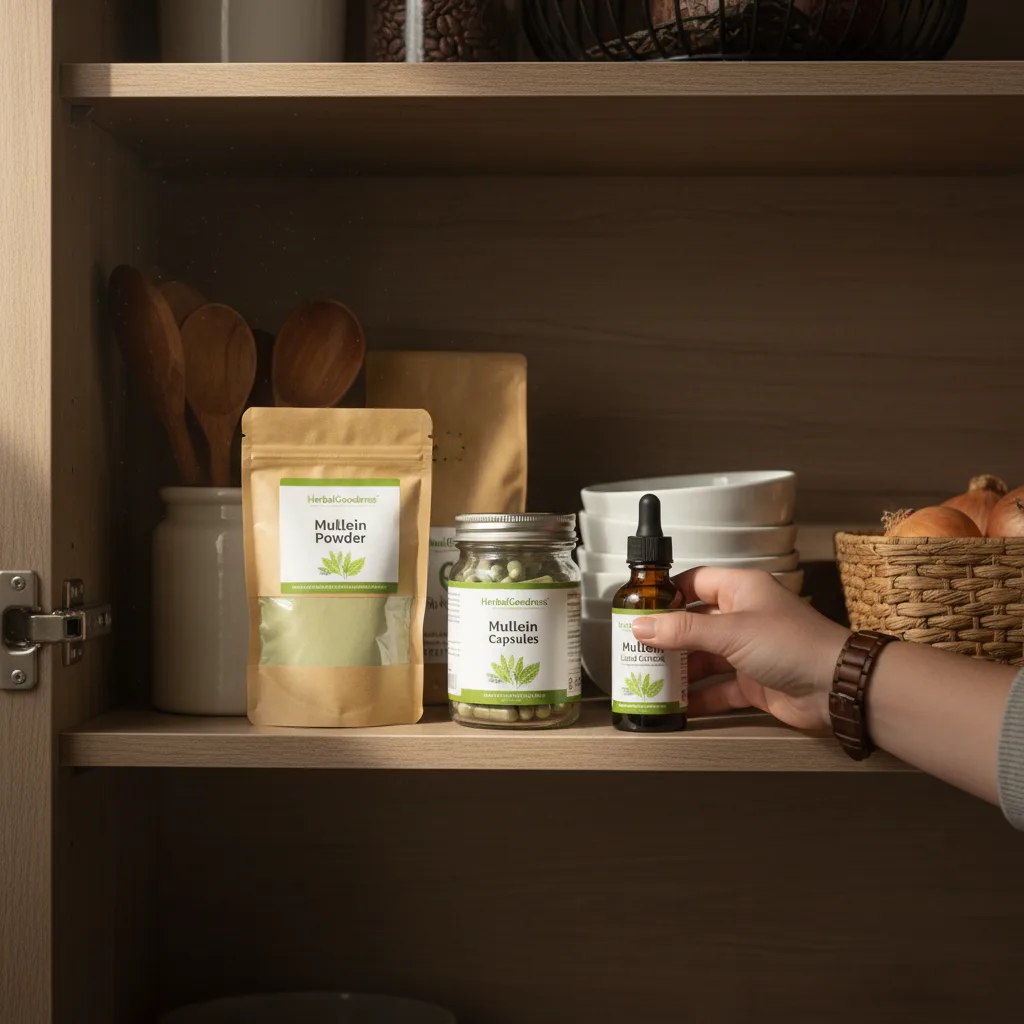
Mullein Powder
Powdered mullein comes from dried, ground leaves or flowers and can be mixed with beverages or food.
- Typical Serving: A scoop (often around 1 g) per serving, depending on concentration.
- Concentration: Powders range from whole plant powder to concentrated extracts—always check the label for details.
- Usage Tips: Mixes well in smoothies, juices, or sprinkled on meals for variety.
If you enjoy versatility in your herbal routine, consider using Bulk Herbs & Roots Online for Tea, Tinctures & DIY Wellness - Organic 4oz Bags for creating your own powdered teas and custom blends. The advantage is clear sourcing, and label transparency for those who want more ingredient control.
Mullein Capsules
Capsules are a concentrated form of mullein, usually containing powdered extract.
- Serving Size: Each capsule is typically standardized to a specific milligram content (e.g., 400 mg).
- Convenience: Capsules are pre-measured, portable, and mask the distinct herbal flavor of mullein.
- Details on Label: Always check if the label states a ratio or references standardized actives.
If you prioritize convenience or standardized concentration, using a capsule product with transparent labeling—like the Blood Platelet Plus - 60/600mg 20X Strength Capsule - Platelet Boost—makes it easy to compare serving sizes and concentrations. These label details give a clear picture of what you’re ingesting.
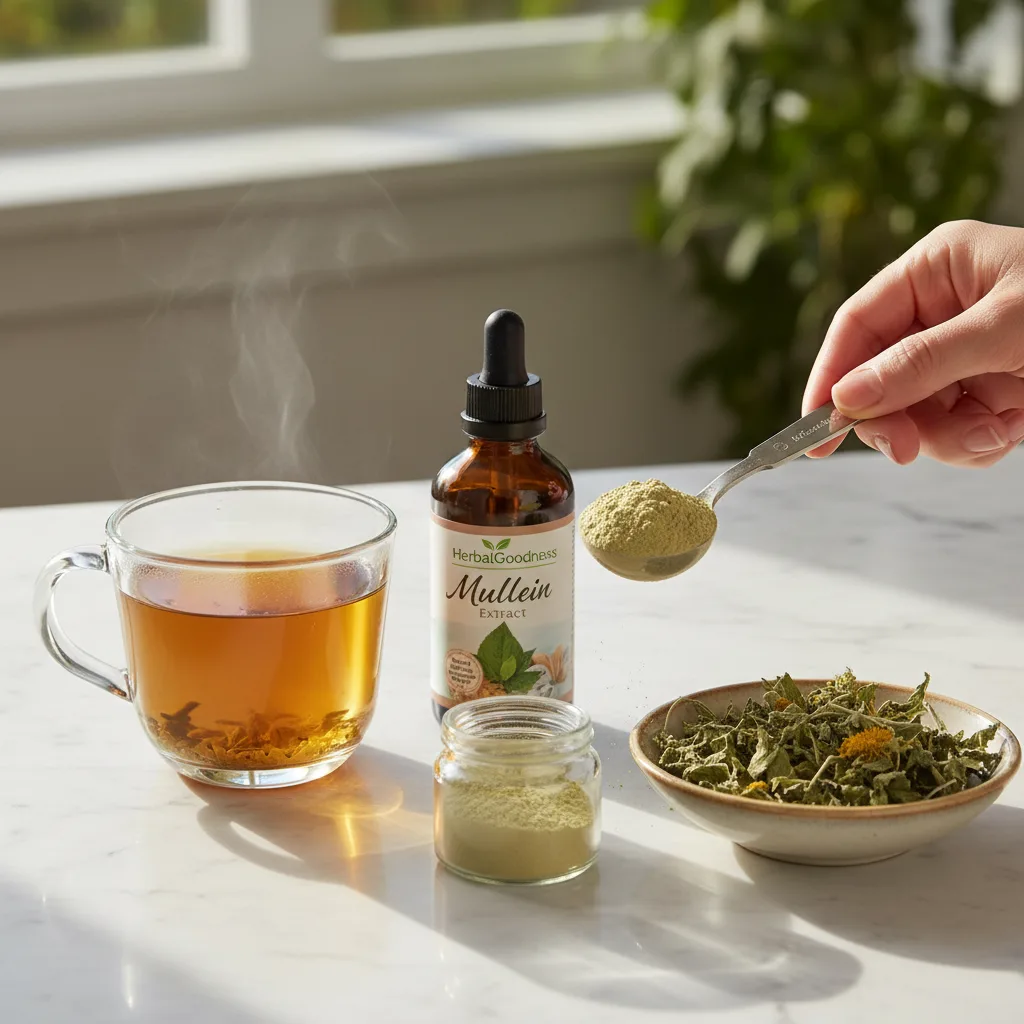
Translating Between Mullein Formats: Practical Equivalents
It’s often challenging to know how a cup of tea compares to a capsule or tincture. While labels provide measurements, understanding the equivalency can help ensure you’re choosing the serving that fits your lifestyle and goals.
Consider these general translation tips:
- “1:3 Extract” in Liquid Form: One dropperful (1 mL) may equate to roughly 333 mg dried herb content.
- Powdered Extracts: If a product indicates “10:1,” it means 10 grams of herb are concentrated down to 1 gram powder. Thus, a 1-gram scoop delivers the equivalent of 10 grams raw plant.
- Capsules: Multiply the number of capsules by their content to compare to loose powder or drops (example: two 400 mg capsules = 800 mg total mullein extract).
- Tea to Extract: One cup of tea made with 2 grams of dried leaf equals the raw herb content, but extract concentration will often be higher. Reference extract ratios for better comparison.
Always review the full supplement facts, looking for details like extract ratio, raw herb equivalence, and active plant compound content. Comparing the Mullein Leaf Tea - Organic 24 Tea Bags - Respiratory & Lung to the Mullein Leaf - Organic 15X Liquid Extract - Respiratory & Lung Health can illustrate how to use label data for cross-format decision making.

Factors to Consider When Choosing a Mullein Supplement
Choosing the most suitable format and ratio relies on several personal and practical factors:
1. Lifestyle Preferences
- Do you prefer traditional tea ceremonies or quick, on-the-go options?
- Would capsules or a tincture better fit your daily routine? If capsules seem right, check standardized formulas such as Blood Platelet Plus - 60/600mg 20X Strength Capsule - Platelet Boost.
2. Concentration vs. Ritual
- Tea may offer less concentrated plant content but is ideal for those who value tradition.
- Extracts and capsules provide higher concentrations in smaller servings. For flexible dosing, look at bulk powder options including Bulk Herbs & Roots Online for Tea, Tinctures & DIY Wellness - Organic 4oz Bags.
3. Transparency and Label Clarity
- Look for brands (like Herbal Goodness) offering detailed sourcing and supplement facts. If you're seeking clear ingredient labeling, the Mullein Leaf - Organic 15X Liquid Extract - Respiratory & Lung Health sets a benchmark.
- Trustworthy suppliers clearly state extract ratios, content, and standardization so you can confidently compare a Mullein Leaf Tea - Organic 24 Tea Bags - Respiratory & Lung bag to a liquid or capsule supplement.
4. Serving Size Flexibility
- Liquids and powders offer flexibility in adjusting serving sizes. Bulk powder, like Bulk Herbs & Roots Online for Tea, Tinctures & DIY Wellness - Organic 4oz Bags, is ideal for customizing your experience.
- Capsules provide precision and convenience for consistent servings, as seen with Blood Platelet Plus - 60/600mg 20X Strength Capsule - Platelet Boost.
How Herbal Goodness Approaches Mullein Quality
At Herbal Goodness, quality sourcing and transparent labeling are foundational. Mullein used for supplements should be:
- Sourced consciously, prioritizing sustainability
- Processed in certified facilities
- Clearly labeled with format, ratio, serving size, and active plant parts
This attention to detail helps consumers make truly informed choices in their wellness journey.
Summary: Building Confidence With Mullein Labels and Formats
Whether you gravitate toward artisanal mullein tea, the efficiency of capsules, or the customizability of a tincture, understanding ratios, serving sizes, and label terminology empowers you to confidently select a mullein supplement that aligns with your preferences. Always prioritize brands that offer transparency—reviewing extract ratios, serving equivalency, and labeling can lead to smarter, more reassuring choices in your herbal routine.
FAQs:
- What does a mullein extract ratio like 1:3 mean?
A ratio such as 1:3 indicates the proportion of dried mullein used to the solvent (typically water, alcohol, or both) during extraction. It means 1 gram of dried mullein is extracted with 3 milliliters of solvent, resulting in a liquid extract representing the phytoconstituents of the original material.
- How can I compare mullein serving sizes across different formats?
Compare serving sizes by checking how much dried mullein is represented per serving. For example, a tea may use 2 grams of dried leaf per cup, while an extract or capsule should state an equivalent or concentrated amount, often clarified by the extract ratio or standardization details.
- Is standardized mullein extract better than non-standardized?
Standardization ensures consistent levels of certain plant compounds in each batch, which some prefer for predictability. Non-standardized products, such as loose leaf teas, showcase natural variation. The choice depends on your preference for consistency or traditional, whole-herb variability.
- Do capsules provide the same mullein benefits as tea?
Capsules usually contain concentrated mullein powder or extract and are convenient for those seeking a precise serving without the ritual of making tea. Both formats offer unique experiences; your choice may hinge on lifestyle or concentration needs.
- How do I know if a mullein product is high quality?
Look for products with transparent sourcing information, clear extract ratios, serving size details, and information about the plant part used. Certifications for quality and safety practices can also help assure product standards.
- Can I increase or decrease my mullein serving size easily?
Powders and tinctures allow easy adjustment of serving size to match personal preference, while capsules and tea bags are typically pre-portioned. Check label guidance if considering changes to your intake.
Author Name:
Herbal Goodness Editorial Team
Author Bio:
The Herbal Goodness Editorial Team specializes in holistic health and superfoods, blending science and nature to educate and empower our community.
References:
Oregano Oil vs. Black Seed Oil: Sensory & Sourcing Guide